Rigby2D 0.5.1: a free, open-source 2D rigging tool that now plays in Godot, Defold and PixiJS
Rigby2D, an open-source 2D skeletal animation editor, shipped 0.5 and 0.5.1 within five days. The Godot runtime is out of preview, Defold gets a native runtime with live editor previews, and PixiJS 8 joins the list of engines.
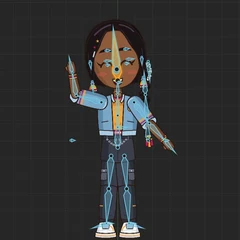
Rigby2D is a young open-source editor for 2D skeletal animation, the bones-and-meshes style of cut-out animation that tools like Spine, DragonBones and Moho are known for. In the past week it shipped two releases: 0.5 on 6 November and 0.5.1 on 11 November.
The code is on GitHub under a dual MIT and Apache-2.0 license. It runs in a browser with nothing to install, or as a desktop app for Windows, macOS and Linux.
What the editor does
You import a layered PSD or SVG, and AutoRig turns it into an editable rig with bones, bending meshes and IK in one step. From there you get a dopesheet, a graph editor, onion skin and a pose library. A Film workspace adds an animated camera and audio tracks, and renders to PNG sequences, WebM with alpha or MP4 at up to 4K. Lip-sync keys a character’s mouth from a voice line, and the project says transcription runs on your own computer.
Rigby2D also opens Spine exports (JSON and .skel, versions 3.8 to 4.3) and DragonBones projects, so existing rigs can come along. A built-in MCP server lets an AI assistant inspect, rig and animate a project, within folders you allow.
What’s new in 0.5 and 0.5.1
- Godot, production-ready. The RigbySkeleton2D and RigbyScene2D nodes are out of preview. The Godot add-on supports Godot 4.3 and later.
- A native Defold runtime. Written in C++ for every platform Defold ships to. In 0.5.1, a new Rigby2D Model component plays right in the Defold editor’s scene view, the way Spine models do.
- PixiJS 8. Characters play natively on WebGL and WebGPU, with an optional WebAssembly core that the release notes say runs about twice as fast for crowds.
- Sprite sheet export. Packed sheets with JSON for Phaser and PixiJS, a Defold atlas, or plain PNG frames.
- SVG import from Inkscape and Affinity, and one-click mesh generation from any image.
- Smaller requests from users, such as bone colors, Ctrl+wheel timeline zoom, a pixel grid for pixel art, and the whole interface in Simplified Chinese.
The project now lists runtimes for Godot, Unity, Defold, Cocos Creator, Phaser, PixiJS, JavaScript and Rust, all free to ship.
Why it matters
Bone-based 2D animation has long meant paid tools. Rigby2D’s own post notes that meshes and IK in Spine need the $379 Professional license. A free editor with a Godot runtime gives indie game makers and small animation teams another path, from a Krita or Inkscape drawing to a moving character, without a license step.
It is early software. The version number is still below 1.0, the downloads are not code-signed yet, and the project is about a month old on GitHub. We haven’t tested it ourselves, so try it on a copy of your art first.
Sources: Rigby2D 0.5.1 devlog, Rigby2D 0.5 devlog, GitHub release notes for v0.5.1 and v0.5.0, and the Rigby2D site.
Thumbnail: Rigby2D, editor screenshot with the NILA character (cropped)